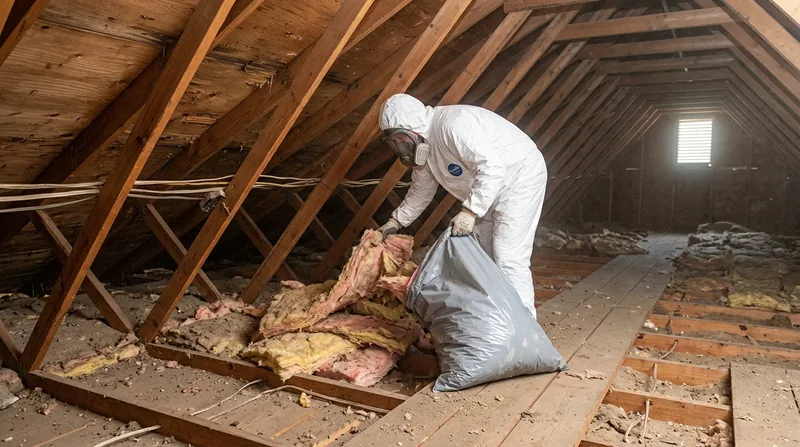




Insulation Removal in Fayetteville is the first step before any retrofit that matters. Springdale's mid-century ranches carry flattened attic insulation that has settled and trapped moisture for decades. Fayetteville's older homes on the hillsides often sit over damp crawl spaces where fiberglass has absorbed water after the region's heavy spring storms. Rogers and Bentonville's newer subdivisions run thin cavity insulation in rooms over garages, and when that material fails or gets wet, it holds the moisture against the Ozark humidity instead of letting it dry. We remove old, damp, or failed insulation from attics and crawl spaces before it keeps trapping moisture and driving up your cooling and heating bills. The right removal clears the path for a real solution: spray foam that seals and controls the moisture in the first place.
Why Insulation Removal Matters in Fayetteville's Climate
The Ozark highlands sit in IECC climate zone 4A, mixed-humid, which means hot humid summers and real winters that bring cold snaps and ice storms. That humidity cycle drives moisture inward during summer and reverses each winter. Old insulation in attics and crawl spaces does not manage that cycle well. Flattened fiberglass lets moisture sit in the material itself instead of letting it escape. Damp insulation loses R-value, supports mold growth, and traps moisture against wood framing and rim joists. Removing failed insulation is not optional if you want the retrofit to work.
- Flattened attic insulation in Springdale ranches settles and compresses, losing R-value and trapping condensation in humid summers.
- Damp crawl space insulation in older Fayetteville neighborhoods absorbs water after spring storms and holds it for months.
- Fiberglass in rim and band joists on hillside homes wicks moisture from the Ozark soil and transfers it into the house structure.
- Wet insulation in rooms over garages in Rogers and Bentonville subdivisions becomes a barrier to drying instead of a thermal layer.
Removing the failed material is the only way to stop the moisture cycle and prepare the cavity for spray foam that actually seals.
Key info: A Springdale ranch with 1,200 square feet of flattened attic insulation can hold 50 to 100 pounds of water after a humid summer. Removing it is the precondition for spray foam that works.
Check with your local building department about permits that may apply to insulation removal in your area. Fayetteville city offices can clarify what documentation is required before work begins.
How We Remove Insulation in Fayetteville
Insulation removal is a controlled, methodical process. We use industrial vacuum equipment to extract loose-fill material from attics and sealed crawl spaces. We contain dust and debris at the source, dispose of material properly, and leave the cavity clean and dry before any new work begins. The removal itself takes a day or less for most residential attics and crawl spaces. We then inspect the substrate, address any moisture or contamination, and prepare the space for spray foam.
- We assess the scope of insulation, its condition, and accessibility from your attic or crawl space entry.
- We set up containment and mechanical ventilation to control dust during the removal process.
- We extract loose-fill or batt insulation using industrial vacuum equipment rated for the material type.
- We inspect the substrate, check for moisture, mold, or pest damage, and document what we find.
- We dispose of removed material in accordance with local waste regulations.
- We clean and prepare the cavity for the next phase of work, whether that is spray foam or another solution.
A clean cavity is the foundation of any insulation retrofit that will last.
Example: A Fayetteville attic with 8 inches of settled fiberglass over 1,400 square feet typically takes 6 to 8 hours to remove, inspect, and prepare for spray foam. A Bentonville crawl space with 4 inches of damp batts and 1,000 square feet of coverage takes 4 to 6 hours.
Once the old material is out, many homeowners move straight to attic spray foam insulation or crawl space spray foam insulation to seal and control moisture in the cavity.
Insulation Removal Methods and Materials
| Method | Description | Best For |
|---|---|---|
| Industrial vacuum extraction | Loose-fill fiberglass or cellulose removed with HEPA-filtered vacuum and contained dust capture. | Attics with blown-in insulation, crawl spaces with settled material. |
| Batt and roll removal | Fiberglass or mineral wool batts hand-removed and bagged for disposal. | Attics with original batt insulation, rim joists, and wall cavities. |
| Damp or contaminated material removal | Saturated or mold-affected insulation carefully extracted and disposed per local codes. | Water-damaged attics, damp crawl spaces, post-storm moisture intrusion. |
| Substrate inspection and prep | After removal, we inspect framing, check for moisture and pests, and document conditions before new insulation. | All removal jobs, required before spray foam or any retrofit can proceed. |
Insulation Removal Cost in Fayetteville: What to Expect
The cost of insulation removal in Fayetteville depends on the square footage of the attic or crawl space, the type and depth of material, and how accessible the cavity is. A straightforward attic removal in a Fayetteville or Springdale home typically starts at $950 and rises with the size of the space and the condition of the material. A damp or contaminated crawl space in an older Rogers or Bentonville property may cost more because the material requires careful handling and the substrate needs inspection for moisture damage.
Factors that affect the final cost include the total square footage of insulation to remove, whether the material is wet or contaminated (which requires more time and care), access to the attic or crawl space (tight entries cost more), and disposal fees for the removed material. Getting 2 or 3 estimates from local contractors is the smart move. Make sure each estimate includes the square footage, the method of removal, substrate inspection, and what happens to the old material.
See our pricing page for a full breakdown of removal costs and what is included at each level. Call us at (479) 480-6143 for a free, no-obligation estimate within 24 hours.
Insulation Removal Near Me: What Fayetteville Homeowners Should Know When Hiring
Hiring the right contractor for insulation removal is about more than price. You need someone who will inspect the substrate carefully, handle damp or contaminated material safely, and prepare the cavity properly for whatever comes next. Ask any contractor you are considering whether they carry full insurance that covers insulation removal and whether they will provide a written estimate with the square footage, removal method, and disposal plan spelled out. Many homeowners make the mistake of getting a single estimate and hiring on price alone. Two or three estimates from different local contractors will show you the range and help you spot the outlier.
- Verify that the contractor carries full insurance and can provide a certificate of insurance before work starts.
- Ask for a written estimate that includes square footage, material type, removal method, and substrate inspection scope.
- Request references from recent insulation removal jobs in Fayetteville or nearby areas, and call at least two.
- Confirm that the contractor will inspect the cavity for moisture, mold, or pest damage and document what they find.
- Ask how the removed material will be disposed of and whether disposal fees are included in the estimate.
- Understand the timeline: most residential attic removals take one day, crawl spaces take 4 to 8 hours depending on size.
A contractor who takes time to inspect and communicate is the one who will set you up for success with whatever retrofit follows the removal.
Ready to get started? Contact us for a free estimate, and we will walk you through the removal process and what comes next.
Insulation Removal in Fayetteville: Pricing Guide
| Service | Price | Details |
|---|---|---|
| Attic insulation removal | Starting at $950 | Blown-in fiberglass or cellulose extraction from 1,000 to 1,500 square feet, vacuum-contained, substrate inspection included |
| Crawl space insulation removal | Starting at $1,200 | Damp or settled insulation removal from crawl spaces, includes moisture assessment and framing inspection before retrofit |
| Damp or contaminated material removal | Starting at $1,400 | Water-damaged or mold-affected insulation requiring careful extraction, disposal, and detailed substrate documentation |
| Large-scale or multi-zone removal | On estimate | Attics over 2,000 square feet, multiple crawl spaces, or complex access scenarios require on-site assessment before pricing |
| Travel and setup | Included | No separate mileage or call-out fee for jobs in Fayetteville and surrounding service areas across Washington and Benton counties |
| Free estimate | No obligation | Written estimate with square footage, method, and timeline provided within 24 hours at (479) 480-6143 |
Indicative pricing, the exact cost depends on square footage, finish, and site access. Free personalized estimate within 24h at (479) 480-6143.


