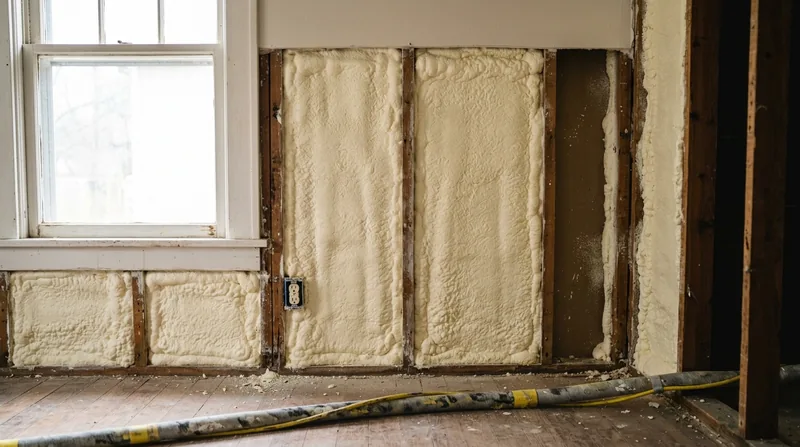




Open Cell Spray Foam Insulation in Fayetteville fills the wall cavities of older homes near downtown and the mid-century ranches across Washington County with a lightweight, flexible foam that expands to reach every corner of original wall assemblies. The Ozark highlands climate here runs hot humid summers and real winters with cold snaps, and homes built before modern insulation standards often carry uninsulated or poorly insulated walls that let conditioned air slip away year-round. Open cell foam works especially well in interior walls and rooms over garages where you need sound dampening alongside thermal control, and it costs less than closed cell while still delivering the air seal that blown-in fiberglass cannot. If your older home in Fayetteville or Springdale has original wall cavities that have never been touched, or if you have a room over a garage that stays too hot in summer and too cold in winter, open cell foam is often the right answer. We've been doing this work since 2014, and we start every estimate with a clear conversation about what you actually need, not what sells the biggest job.
Why Open Cell Spray Foam Matters in Older Fayetteville Homes
The neighborhoods near the University of Arkansas and downtown Fayetteville are full of homes built from the 1950s through the 1980s with wall cavities that were never insulated at all. Modern building code requires insulation in those walls, but the only way to reach them without tearing into drywall is to inject foam from the outside or use open cell foam through access points. Open cell foam fills those cavities completely, seals the air leaks that fiberglass misses, and does it without the weight and rigidity of closed cell. In a mixed-humid climate like ours, where humidity swings from high in summer to dry in winter, open cell's vapor-permeable nature lets walls dry toward the inside on winter days and toward the outside on humid summer afternoons, which keeps moisture from getting trapped.
- Open cell foam expands to fill irregular cavities and gaps that blown-in insulation leaves empty.
- The foam creates an air seal that stops drafts and reduces the load on your heating and cooling system.
- Sound dampening in walls and rooms over garages reduces noise from outside traffic and from the garage below.
- Vapor permeability allows walls to dry in a mixed-humid climate without trapping moisture at the wrong time of year.
Getting the air seal right is what separates a properly insulated home from one that looks insulated but still leaks.
Key info: A 1960s ranch in Fayetteville with original uninsulated walls can see wall temperatures swing 20 to 30 degrees between inside and outside on a winter morning, which is why that room always feels cold. Open cell foam stops that temperature swing and the draft that comes with it, and it does it without the condensation risk that a vapor-tight barrier would create in our climate.
For guidance on what the local building code requires at your address, check with the City of Fayetteville Planning and Development Department, which administers building permits and code compliance for residential and commercial work in the city.
How We Install Open Cell Spray Foam in Fayetteville Homes
Open cell foam installation starts with a detailed look at your wall cavities, access points, and what the existing assembly can handle. We drill small access holes (usually from the exterior, sometimes from the interior if that's the only option), spray the foam in controlled passes to build thickness without over-packing the cavity, and then seal those access holes. The foam expands as it cures, filling every gap, and then we trim it flush with the cavity depth. Mechanical ventilation during cure is non-negotiable, and we set a re-entry window of 24 to 48 hours depending on temperature and humidity. The whole process is quieter and faster than injection foam in some cases, and it leaves you with a sealed, insulated wall that will perform for decades.
- We assess your wall cavity depth, existing insulation, and structural condition before any foam is ordered.
- We drill small access holes from the exterior or interior, depending on what gives us the best spray angle and cleanest finish.
- We spray the foam in thin passes at the correct ratio and temperature, allowing each pass to expand fully before the next.
- We run mechanical ventilation throughout cure to manage off-gassing and ensure the foam sets correctly.
- We trim the foam flush, seal all access holes, and restore the exterior or interior surface.
The whole job is done right the first time, with no shortcuts and no promises we cannot keep.
Real example: A 1970s colonial on a hillside in Fayetteville had a master bedroom that ran 8 to 10 degrees colder than the rest of the house in winter. The exterior walls had no insulation at all. We drilled access holes from the attic side, sprayed open cell foam into the wall cavities, and brought that room temperature in line with the rest of the house. The homeowner also noticed less street noise coming through those walls, which was an unexpected bonus.
For more on how air sealing and insulation work together, see our air sealing service page, which covers the gaps that spray foam alone cannot reach.
Open Cell Spray Foam Installation Methods
| Method | Description | Best For |
|---|---|---|
| Exterior Access Drilling | Small holes drilled through exterior sheathing or cladding, foam sprayed from outside, holes sealed and exterior patched. | Older homes with accessible exterior walls and no interior finish damage desired. |
| Interior Access Drilling | Holes drilled from interior (often from attic or basement), foam sprayed inward, holes sealed with drywall patch. | Homes where exterior access is difficult or where interior finish is already open. |
| Attic Cavity Fill (Rooms Over Garages) | Open cell foam sprayed into ceiling cavities above garage spaces or attic rim cavities, controlled thickness per code. | Rooms over garages or attic spaces where insulation and sound dampening are both needed. |
| Wall Retrofit with Existing Insulation | Open cell foam sprayed alongside or over partial insulation to fill voids and seal air gaps, increasing effective R-value. | Homes with damaged, settled, or incomplete insulation that need upgrading without full removal. |
Open Cell Spray Foam Insulation Cost in Fayetteville: What to Expect
Open cell spray foam typically runs from $0.55 to $0.85 per board foot, depending on cavity depth, wall accessibility, and how much of the wall is being filled. A typical wall cavity 3.5 inches deep in a 1,500-square-foot home might run 500 to 800 board feet, putting the material and labor cost in the $275 to $680 range for that wall. What moves the price up or down is access (exterior holes cost less to drill than interior attic access in some cases), cavity condition (clean cavities spray faster), and how much prep work is needed to protect flooring, landscaping, or interior finishes. Getting 2 or 3 estimates is smart because spray foam pricing varies based on the contractor's equipment, crew efficiency, and how thoroughly they assess the job before quoting. For a detailed breakdown of pricing across all our services, visit our pricing page, which shows starting rates and the factors that change them.
Keep in mind that the cheapest estimate is often the one that skips the mechanical ventilation during cure, rushes the application, or promises immediate re-entry. A proper job costs what it costs because it is done right, and you will live with it for 30 or 40 years.
What to Look for When Hiring an Open Cell Spray Foam Contractor Near Fayetteville
When you call a spray foam contractor in Fayetteville, Springdale, Rogers, or Bentonville, start by asking for a written estimate that includes R-value, foam thickness in inches, and the board footage being sprayed. Any contractor who gives you a price without those numbers is guessing, and a guess is a liability. Ask whether they will run mechanical ventilation during cure and what re-entry window they recommend, because immediate re-entry is a red flag. Check that they carry full insurance and ask for a certificate of insurance before work starts, not after. If your home is in an HOA community, check whether architectural approval is needed for exterior work like drilling and patching. For homes built before 1980, ask whether they have encountered vermiculite insulation in your area, because if they have, it needs to be tested by a licensed professional and left alone, never disturbed or sprayed over. Call our office at (479) 480-6143 for a free estimate, and we will walk you through exactly what we are doing and why.
- Request a written estimate with R-value, thickness in inches, and board footage clearly stated.
- Ask whether the contractor runs mechanical ventilation during cure and what re-entry window they recommend.
- Verify full insurance coverage and request a certificate before work begins.
- Check your HOA rules if you live in a master-planned community, as exterior drilling and patching may need approval.
- Ask about the contractor's experience with older homes and original wall cavities in the Fayetteville area.
Hiring the right contractor means getting a job that performs, not a job that smells bad for weeks or leaves you with gaps and settling.
Open Cell Spray Foam Insulation in Fayetteville: Pricing Guide
| Service | Price | Details |
|---|---|---|
| Open Cell Spray Foam (Wall Cavities) | Starting at $0.55/board ft | Includes drilling, foam application, ventilation during cure, and hole sealing. Cavity depth and wall accessibility determine final cost. |
| Open Cell Spray Foam (Rooms Over Garages) | Starting at $0.60/board ft | Ceiling cavity fill with thermal barrier compliance and sound dampening. Attic access and existing insulation condition affect the total. |
| Retrofit with Existing Insulation | On estimate | When partial insulation exists, we assess condition and coverage before pricing. Removal, replacement, or supplemental spray depends on what we find. |
| Travel and Mobilization | Included | No separate mileage fee or call-out charge within Fayetteville and surrounding Greater Fayetteville service area. |
| Free Written Estimate | Free | Response within 24 hours at (479) 480-6143. Includes R-value, thickness, and board footage. No obligation to book. |
Indicative pricing, the exact cost depends on square footage, finish, and site access. Free personalized estimate within 24h at (479) 480-6143.


