Understanding the Difference Between Air Sealing and Spray Foam
When homeowners in Fayetteville start thinking about improving their home's energy efficiency, they often encounter two terms that sound similar but serve different purposes: air sealing and spray foam insulation. While both play a role in making your home more comfortable and energy-efficient, they work in distinct ways and address different problems.
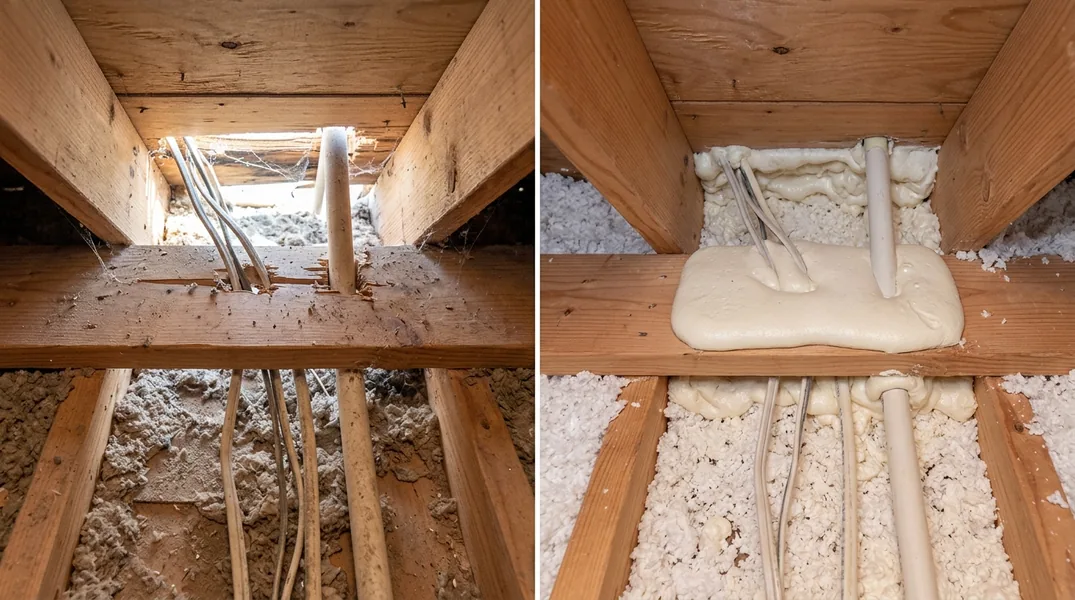
Air sealing is the process of identifying and closing gaps, cracks, and leaks in your home's envelope. These small openings allow conditioned air to escape and outside air to enter, which forces your heating and cooling systems to work harder than necessary. Common areas where air leaks occur include around windows and doors, where pipes and wires penetrate walls, and in attic bypasses. Air sealing typically uses caulk, weatherstripping, or foam sealant to plug these specific problem areas.
Attic Spray Foam Insulation, by contrast, is a comprehensive insulation solution that fills entire cavities and creates an air-tight thermal barrier. Spray foam expands to fill spaces completely, eliminating air pockets and providing both insulation and air sealing in one application. This is why many homeowners and energy auditors view spray foam as a more complete solution, though it comes with a higher upfront investment.
When Air Sealing Alone Is Sufficient for Your Home
Air sealing is often the right choice if your home already has adequate insulation but you're experiencing drafts, high energy bills, or uneven temperatures between rooms. If an energy audit reveals that your primary energy losses are due to air leakage rather than insufficient insulation, sealing those gaps can deliver significant results. Homes with existing fiberglass batts, blown-in cellulose, or mineral wool insulation that is in good condition may benefit most from targeted air sealing.
The cost-effectiveness of air sealing makes it attractive for budget-conscious homeowners. You can address your most problematic areas first, such as sealing around attic access doors, ductwork, and recessed lighting fixtures. Many homeowners find that air sealing alone can reduce energy consumption by 10 to 15 percent, which translates to meaningful savings on heating and cooling costs throughout the year. Additionally, air sealing requires less disruption to your home and can often be completed in a single day.
However, air sealing does not improve your home's overall R-value or insulation rating. If your attic insulation is thin, compressed, or deteriorating, air sealing will only address half the problem. You'll still have thermal gaps that allow heat transfer, which means your HVAC system will continue to work harder than it should during extreme weather.
Why Full Spray Foam Insulation Delivers Superior Results
Closed Cell Spray Foam Insulation and Open Cell Spray Foam Insulation both offer significant advantages over traditional insulation methods and air sealing alone. The primary benefit is the spray foam insulation R value per inch, which is substantially higher than conventional materials. Closed cell foam typically delivers an R-value of 6.0 to 7.0 per inch, while open cell foam provides approximately 3.6 to 3.8 per inch. This density means you can achieve higher overall R-values in thinner applications, which is especially valuable in attics where space may be limited.
Beyond the impressive R-value performance, spray foam creates a seamless, continuous air barrier that traditional insulation cannot match. When applied correctly, spray foam expands to fill every crevice, eliminating the small gaps that air sealing addresses one at a time. This comprehensive approach reduces air infiltration by up to 99 percent in treated areas, making your home far more comfortable and reducing strain on your HVAC system. Homeowners often report noticing the difference immediately, with more consistent temperatures throughout their homes and fewer drafts.
Spray foam also provides additional benefits beyond insulation and air sealing. It acts as a moisture barrier, helping to prevent mold and mildew growth in your attic. It can improve indoor air quality by reducing the infiltration of outdoor allergens and pollutants. For homeowners in Fayetteville who live in older homes or homes with irregular framing, spray foam's ability to conform to any shape makes it the most effective solution available.
R Value Requirements by State and What Fayetteville Homeowners Should Know
Arkansas has specific building code requirements for attic insulation that homeowners should understand when deciding between air sealing and spray foam. The current Arkansas energy code requires a minimum R-value of R-38 for attic insulation in most residential applications, though this can vary slightly based on local amendments and the age of your home. Understanding these R value requirements by state helps you make an informed decision about whether your current insulation meets code and whether you need to upgrade.
If your attic currently has R-19 or R-30 insulation (common in older homes), air sealing alone will not bring you into compliance with modern energy standards. You would need to add additional insulation material to meet the R-38 requirement. Many homeowners find that adding blown-in insulation on top of existing batts is more affordable than spray foam, but this approach still leaves you with the air leakage problems that air sealing addresses. Spray foam, when applied at the proper thickness, can meet or exceed Arkansas code requirements while simultaneously solving air infiltration issues in one step.
The thickness of spray foam needed to meet code depends on whether you choose closed cell or open cell. For closed cell foam, you would typically need 5.5 to 6 inches to achieve R-38. For open cell foam, you would need approximately 10 to 11 inches. When deciding how thick should spray foam be for your specific situation, a professional energy audit and consultation is invaluable. Contact Fayetteville Spray Foam Insulation at (479) 480-6143 to discuss your home's current insulation levels and code compliance.
Understanding Insulation Tax Credits and Rebates Available to You
One of the most compelling reasons to upgrade your home's insulation is the availability of financial incentives. The federal government and many state programs offer an insulation tax credit to homeowners who improve their home's energy efficiency. These incentives can significantly reduce the out-of-pocket cost of upgrading to spray foam or adding air sealing improvements. For 2024 and beyond, homeowners may qualify for tax credits of up to 30 percent of the cost of certain insulation improvements, subject to income limits and specific requirements.
In addition to federal tax credits, Arkansas utility companies and local energy efficiency programs often offer insulation rebates for homeowners who upgrade their insulation. Entergy Arkansas and other local providers may have rebate programs that apply directly to spray foam installation costs. These rebates can range from several hundred to several thousand dollars, depending on the scope of your project and your utility provider's current programs. The combination of federal insulation tax credit and local rebates can make spray foam insulation much more affordable than the sticker price suggests.
When you're evaluating the cost-effectiveness of air sealing versus spray foam, be sure to factor in these available incentives. A project that seems expensive upfront may become highly attractive once you account for tax credits and rebates. Our team can help you navigate these programs and ensure your project qualifies. Reach out for a free estimate and we'll discuss what financial assistance may be available for your specific situation.
Making Your Decision: A Practical Framework for Fayetteville Homeowners
Choosing between air sealing and full spray foam insulation ultimately depends on your home's current condition, your budget, and your long-term goals. Start by having a professional energy audit performed on your home. This assessment will identify where you're losing energy, whether through air leakage or insufficient insulation. If the audit reveals that air leakage is your primary problem and your insulation levels are already adequate, air sealing may be the right choice. If your insulation is thin, compressed, or degraded, or if you want the most comprehensive solution, spray foam is worth the investment.
Consider your timeline and comfort goals as well. Air sealing delivers quick results and can be done immediately, making it ideal if you're experiencing specific drafts or problems. Spray foam requires more planning and typically involves some disruption to your attic space, but the long-term benefits in energy savings, comfort, and home value are substantial. Many homeowners find that the energy savings from spray foam pay for itself within 5 to 7 years, after which it continues to save money indefinitely.
The good news is that you don't have to make this decision alone. The team at Fayetteville Spray Foam Insulation has helped hundreds of homeowners throughout Fayetteville evaluate their options and choose the right solution for their specific needs. Whether you're interested in exploring Wall & Injection Foam Insulation for your walls or full attic spray foam, we can assess your home and provide honest recommendations. Call us at (479) 480-6143 or visit our website to schedule your free estimate today. We'll help you understand the real costs, available incentives, and expected energy savings so you can make the best decision for your home and family.
Looking for a professional spray foam insulation contractor in Fayetteville? Fayetteville Spray Foam Insulation responds fast for all your spray foam insulation needs.
Get a Free Quote