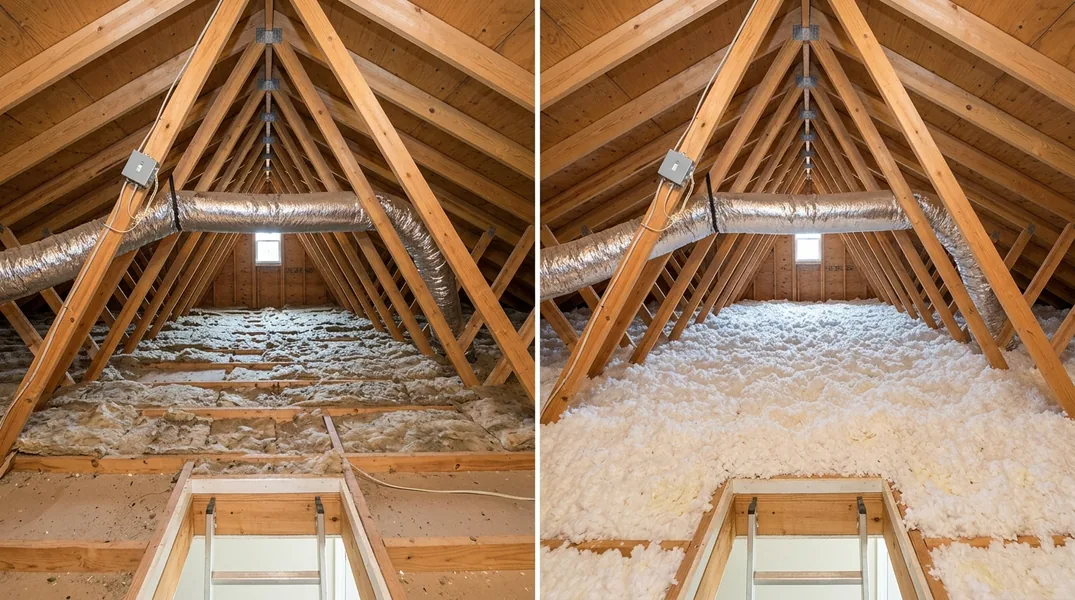
Why Old Homes in Fayetteville Need Better Insulation
Homes built decades ago, especially those near the University of Arkansas campus in Fayetteville, were often constructed with outdated insulation materials or minimal thermal protection. Fiberglass batts, loose-fill cellulose, and even homes with no insulation at all are common in older neighborhoods. Over time, these materials settle, degrade, and lose their effectiveness, leaving attics drafty and energy bills climbing.
The climate in Fayetteville demands reliable insulation year-round. Winters bring cold snaps that can push heating costs through the roof, while humid summers make air conditioning work overtime. Homeowners with older properties often discover that their current insulation fails to provide adequate protection, resulting in uneven temperatures, moisture problems, and wasted energy. If you own a vintage home in the area, upgrading your insulation is one of the smartest investments you can make.
Is Spray Foam Insulation Worth It for Older Homes
Attic Spray Foam Insulation offers significant advantages for older homes that traditional insulation cannot match. When spray foam is applied, it expands to fill every crack, crevice, and gap in your attic space. This complete coverage eliminates air leaks that are almost impossible to seal with conventional methods. For homeowners dealing with the quirky layouts and settling foundations common in older properties, spray foam adapts to the unique geometry of your space in ways that batts and blankets simply cannot.
The return on investment becomes clear when you examine energy savings. Homeowners report 15 to 20 percent reductions in heating and cooling costs after upgrading to spray foam. In older homes where energy loss is particularly severe, savings can be even more dramatic. Beyond immediate utility bill reductions, spray foam increases home comfort by eliminating cold spots and drafts. It also provides structural support to roof decking, improves moisture control, and can last 80 years or more with proper installation. For a historic home struggling with efficiency, the answer to whether spray foam is worth it is typically yes.
Is Spray Foam Insulation Safe: Understanding the Facts
Safety concerns about spray foam insulation are legitimate questions that homeowners should ask. When properly installed by certified professionals, spray foam is safe and has been used in residential construction for over three decades. The key phrase here is proper installation. During application, spray foam releases isocyanate fumes that can irritate eyes, nose, and lungs. However, these fumes dissipate quickly once the foam cures, typically within 24 to 48 hours. Professional installers wear protective equipment and ensure proper ventilation during the application process to minimize exposure.
After curing, spray foam itself is inert and poses no health risk to occupants. The material does not off-gas harmful chemicals into your living space when applied correctly. Problems arise when installation is rushed, ventilation is inadequate, or unqualified contractors cut corners. This is why choosing an experienced, licensed contractor for your Attic Spray Foam Insulation project is critical. Fayetteville Spray Foam Insulation follows industry standards and best practices to ensure your safety and your family's wellbeing throughout the installation process.
Spray Foam Off Gassing and Indoor Air Quality Concerns
Spray foam off gassing is a topic that generates confusion and concern among homeowners. Off gassing refers to the release of volatile organic compounds (VOCs) from materials after installation. With spray foam, off gassing occurs primarily during and immediately after application. Once the foam fully cures, which typically takes 24 to 72 hours depending on temperature and humidity, off gassing essentially stops. The cured foam is chemically stable and does not continue to release harmful substances into your home.
To minimize off gassing concerns, ensure your attic has adequate ventilation during and after installation. If your home is occupied, consider having family members stay elsewhere during application and for at least 24 hours afterward. Proper ventilation of the attic space allows any residual fumes to dissipate safely. Many homeowners also choose to have their HVAC system inspected to ensure it is not pulling air from the attic into living spaces. When you work with professionals who understand these protocols, off gassing becomes a minor, temporary consideration rather than a lasting health concern. The long-term benefits of improved insulation far outweigh the brief discomfort of installation day.
Spray Foam Insulation Pros and Cons: A Balanced Look
Understanding both the advantages and disadvantages of spray foam helps you make an informed decision for your older home. The pros are substantial: superior air sealing, high R-value per inch, moisture resistance, longevity, and excellent performance in complex attic geometries. Closed Cell Spray Foam Insulation provides the highest R-value and offers vapor barrier properties, making it ideal for humid climates. Open Cell Spray Foam Insulation costs less and provides good insulation while remaining vapor permeable, which some applications prefer. Both types dramatically outperform traditional insulation in air sealing capability.
The cons deserve honest consideration as well. Spray foam insulation typically costs more upfront than fiberglass or cellulose. Installation requires specialized equipment and trained technicians, which limits your contractor options. Once applied, spray foam is difficult and expensive to remove if future attic access or modifications are needed. Some homeowners have experienced problems with improper installation, including inadequate curing, excessive expansion that damages roof decking, or incomplete coverage. These issues underscore the importance of hiring qualified, experienced professionals. For older homes in Fayetteville, the pros typically outweigh the cons, especially when you partner with reputable contractors who stand behind their work.
Spray Foam Insulation Problems: What Can Go Wrong and How to Avoid Them
Several spray foam insulation problems have been documented when installation is mishandled. Excessive expansion can push against roof decking or rafters, causing structural stress or warping. Incomplete mixing of the chemical components results in poor curing and inadequate insulation properties. Moisture trapped under improperly installed foam can lead to mold growth or wood rot in older attics. Inadequate ventilation during application creates health and safety hazards. Poor coverage leaves gaps that defeat the purpose of upgrading to spray foam in the first place.
The best way to avoid these problems is to work with established, certified contractors who have extensive experience with older homes. Ask for references, verify licensing and insurance, and request detailed information about their installation process. A reputable company will explain how they handle attic ventilation, protect your home during installation, and ensure proper curing conditions. They should also provide warranties on their work. When you contact Fayetteville Spray Foam Insulation at (479) 480-6143 for a free estimate, you can ask these important questions and feel confident that your project will be handled correctly.
Choosing Between Spray Foam and Other Insulation Options
For homeowners with older properties, the decision between spray foam and traditional insulation often comes down to your specific needs and budget. Fiberglass batts are inexpensive but provide poor air sealing and settle over time. Cellulose is eco-friendly and affordable but can absorb moisture and lose effectiveness. Blown-in fiberglass offers better coverage than batts but still cannot match spray foam's air sealing capabilities. Wall & Injection Foam Insulation is an excellent option for exterior walls and rim joists in older homes, providing insulation where traditional methods cannot reach effectively.
If your primary concern is energy efficiency and long-term performance, spray foam is the superior choice despite higher initial pricing. The energy savings, comfort improvements, and durability typically justify the investment over the life of your home. If budget is your main constraint, traditional insulation combined with strategic air sealing may be a reasonable interim solution. However, many homeowners find that the monthly savings on utility bills quickly offset the higher upfront cost of spray foam. The best approach is to get professional assessments from experienced contractors who can evaluate your specific situation and recommend the most cost-effective solution for your older home.
Looking for a professional spray foam insulation contractor in Fayetteville? Fayetteville Spray Foam Insulation responds fast for all your spray foam insulation needs.
Get a Free Quote