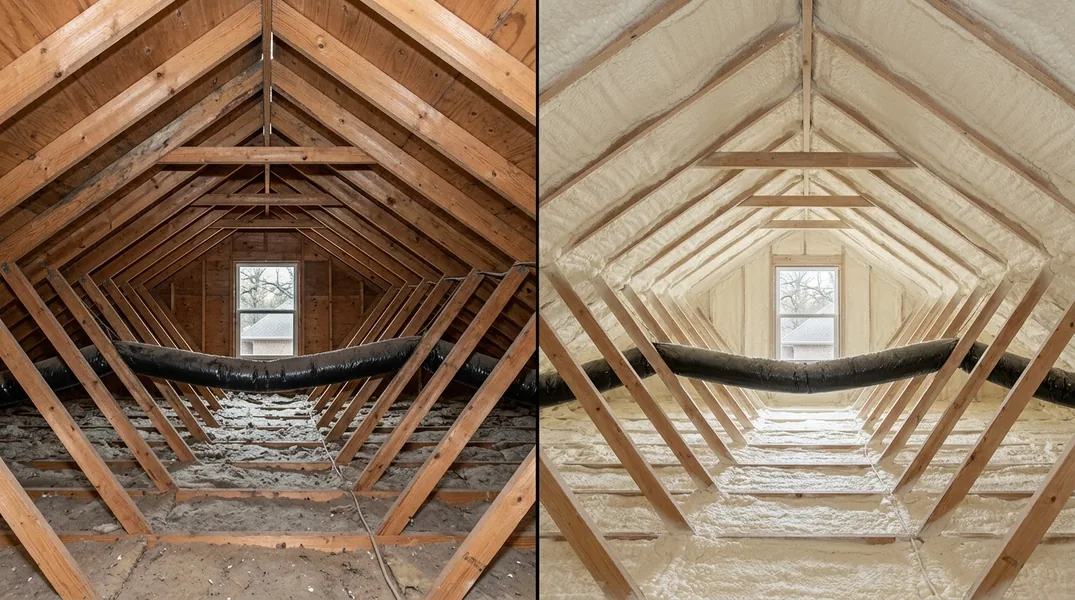
Why Mid-Century Ranch Attics in Springdale Need Attention
Mid-century ranches built in Springdale and throughout Northwest Arkansas represent a unique architectural charm, but many homeowners discover that their attics tell a different story. These homes, typically constructed between the 1940s and 1970s, were often insulated with materials that have simply not stood the test of time. Over decades, the original insulation has settled, compressed, and lost its thermal effectiveness, leaving homeowners with higher energy bills and uncomfortable living spaces.
The problem is particularly acute in attics, where temperature fluctuations, moisture, and gravity all work against traditional insulation materials. If you've noticed that your utility bills spike during summer cooling season or winter heating, or if certain rooms feel drafty regardless of your thermostat settings, flattened attic insulation is likely the culprit. The good news is that modern solutions exist, and understanding your options can help you make an informed decision about upgrading your home's thermal envelope.
Spray Foam vs Blown In Insulation: Which Performs Better Long-Term
When comparing Attic Spray Foam Insulation to blown-in insulation, the differences become apparent when you examine durability and performance over time. Blown-in insulation, whether fiberglass or cellulose, relies on loose fibers that settle and compress under their own weight. In a typical attic, blown-in materials can lose 10 to 20 percent of their R-value within the first year as the fibers pack down. After ten years, the performance degradation becomes significant, which is exactly why many Fayetteville homeowners with older homes are discovering that their insulation simply isn't doing its job anymore.
Spray foam, by contrast, expands to fill every cavity and gap, then hardens into a solid mass that resists settling and compression. The R-value of spray foam remains stable over decades, making it a superior choice for long-term energy efficiency. Additionally, spray foam creates an air seal that blown-in materials cannot match, preventing heated or cooled air from escaping through gaps and cracks. For homeowners dealing with the aftermath of flattened insulation, this difference translates to real savings on energy bills and improved comfort year-round.
Spray Foam vs Fiberglass: The Attic Insulation Showdown
Fiberglass batts and rolls have been the industry standard for decades, and many mid-century ranches were originally insulated with this material. While fiberglass is affordable and easy to install, it suffers from the same settling and compression issues as blown-in fiberglass. Fiberglass also requires a vapor barrier to function properly, and if that barrier is damaged or improperly installed, moisture can accumulate in your attic, leading to mold, wood rot, and further insulation degradation.
Spray foam eliminates these concerns entirely. Whether you choose Closed Cell Spray Foam Insulation or Open Cell Spray Foam Insulation, you get superior air sealing, moisture resistance, and structural support. Closed cell foam offers higher R-value and acts as a vapor barrier itself, while open cell foam is more affordable and still provides excellent air sealing. Both options significantly outperform fiberglass in terms of longevity and energy efficiency, making them the best insulation for attic applications in older homes that have suffered from settling and moisture issues.
Spray Foam vs Cellulose: Understanding the Trade-offs
Cellulose insulation, made from recycled paper, is marketed as an eco-friendly alternative to fiberglass and synthetic materials. While the environmental angle appeals to many homeowners, cellulose shares the fundamental weakness of all loose-fill insulation: it settles over time. In fact, cellulose can settle even more noticeably than fiberglass because the individual fibers are lighter and more prone to compression. After a decade or more, cellulose insulation in an attic can lose significant R-value, requiring costly top-ups to maintain performance.
Cellulose also requires chemical treatments to meet fire codes, and those treatments can degrade over time, particularly in humid climates. Additionally, cellulose is highly susceptible to moisture damage and can harbor mold if your attic develops any moisture issues. Spray foam addresses these shortcomings by providing permanent, non-settling insulation that resists moisture and requires no chemical treatments. For homeowners in Springdale dealing with older homes and flattened insulation, spray foam is simply the more reliable long-term investment.
Attic Spray Foam Insulation Cost in Fayetteville: What to Budget
One of the most common questions homeowners ask is whether spray foam insulation is worth the investment. Yes, it is, and here's why. While spray foam typically costs more upfront than blown-in or fiberglass alternatives, the long-term value proposition is compelling. Spray foam doesn't settle, doesn't require replacement every ten to fifteen years, and delivers superior energy efficiency from day one. When you calculate the cost savings on utility bills over twenty or thirty years, spray foam becomes the more economical choice.
The exact cost of upgrading your attic depends on several factors, including the square footage of your attic, the current insulation situation, and whether you choose closed cell or open cell foam. For a detailed breakdown of pricing tailored to your home, we recommend reaching out to Fayetteville Spray Foam Insulation for a free estimate. Our team will assess your attic, discuss your goals, and provide transparent pricing so you can make an informed decision. Call us at (479) 480-6143 to schedule your consultation.
Getting Professional Attic Spray Foam Insulation Near Me
If you own a mid-century ranch in Fayetteville or the surrounding area and suspect that your attic insulation has flattened or failed, professional installation is the best path forward. While some homeowners consider DIY insulation projects, attic spray foam requires specialized equipment, proper safety protocols, and expertise to ensure correct application and optimal results. Improper installation can lead to incomplete coverage, inadequate air sealing, and wasted money.
Fayetteville Spray Foam Insulation brings decades of combined experience to every project. Our team understands the unique challenges of upgrading older homes, and we take pride in delivering solutions that improve comfort, reduce energy costs, and protect your home's structure. We serve homeowners throughout Fayetteville and the Northwest Arkansas region. If you're ready to address your flattened attic insulation and experience the difference that modern spray foam can make, contact us today at (479) 480-6143 or visit our website at https://fayetteville-ar-spray-foam.com to learn more about our services and get started with a free estimate.
Looking for a professional spray foam insulation contractor in Fayetteville? Fayetteville Spray Foam Insulation responds fast for all your spray foam insulation needs.
Get a Free Quote