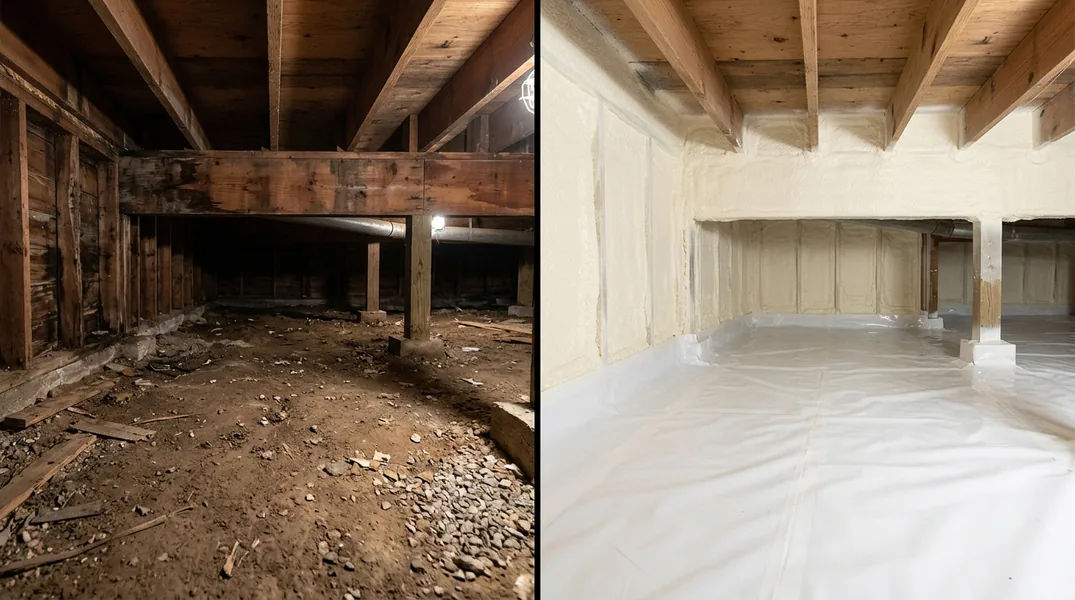
Understanding Climate Zone 4A and Its Impact on Your Home
If you own a home in Fayetteville, you live in what the U.S. Department of Energy classifies as Climate Zone 4A. This designation means your region experiences both cold winters and hot, humid summers, creating a genuinely complex environment for home insulation. Unlike areas with purely cold winters or consistently warm climates, Zone 4A requires insulation strategies that address moisture control, temperature swings, and seasonal humidity fluctuations all at once.
The challenge becomes even more pronounced when you consider the specific construction styles common to northwest Arkansas. Many homes in the region feature crawl spaces and pier-and-beam foundations rather than concrete slabs. These design choices, while offering certain advantages, expose your home's underside to outdoor air, temperature extremes, and moisture intrusion. Without proper insulation and air sealing, your energy bills climb steadily, and your home's structural integrity can suffer over time. This is precisely why homeowners in Springdale and surrounding communities are turning to modern spray foam solutions to address these vulnerabilities.
Why Crawl Space Insulation is Critical in Zone 4A
Your crawl space is essentially your home's thermal foundation. In Climate Zone 4A, an uninsulated or poorly insulated crawl space becomes a major energy liability. Cold air seeping up through the floor during winter makes your living spaces uncomfortable and forces your heating system to work harder. In summer, warm, humid air enters the crawl space, promoting mold growth and wood rot. The stakes are high, and the solution requires more than fiberglass batts or basic foam board.
Crawl space spray foam addresses these issues in ways traditional insulation cannot. Spray foam creates an air-tight seal that blocks drafts, reduces moisture infiltration, and maintains consistent temperatures year-round. Whether you choose Closed Cell Spray Foam Insulation or Open Cell Spray Foam Insulation, both deliver superior performance compared to conventional materials. Closed-cell foam offers higher R-value and exceptional moisture resistance, making it ideal for crawl spaces where vapor barriers are essential. Open-cell foam provides excellent sound dampening and cost efficiency while still delivering strong thermal performance.
Pier and Beam Insulation: Protecting the Vulnerable Underside
Pier-and-beam construction, common in older and mid-century homes throughout northwest Arkansas, leaves significant gaps between your home's floor and the ground below. This design allows for excellent drainage and ventilation but also exposes your home to outdoor temperature swings. In winter, uninsulated pier-and-beam foundations allow cold air to rise directly into your living spaces. In summer, heat radiates upward, making air conditioning work overtime. The result is poor comfort and unnecessarily high utility costs.
Proper pier and beam insulation requires a comprehensive approach that seals the rim band, insulates the band board, and protects the exposed perimeter. Spray foam excels in this application because it conforms to irregular framing, seals gaps that traditional insulation misses, and provides continuous thermal protection. Many homeowners are surprised to learn that upgrading their pier-and-beam insulation can reduce heating and cooling costs by 15 to 25 percent, depending on the current condition of their home. If you have cold floors during winter or notice temperature inconsistencies between rooms, your pier-and-beam assembly is likely the culprit.
Cold Floors in Winter: A Zone 4A Reality
One of the most common complaints from homeowners in Fayetteville is cold floors during the winter months. You're not alone if you find yourself layering socks or investing in area rugs just to stay comfortable in your own home. Cold floors are a direct result of poor crawl space insulation or inadequate rim band sealing. Cold air from the crawl space rises into your living areas, making your floors feel frigid no matter how high you set your thermostat.
The solution is straightforward: seal and insulate your crawl space properly. Spray foam insulation creates a thermal break that prevents cold air from entering your home. By insulating the rim band, band board, and crawl space walls or floor, you create a warm barrier between your living space and the outdoor environment. Homeowners report noticeably warmer floors within weeks of completing spray foam insulation work. Beyond comfort, this upgrade also protects your pipes from freezing, reduces the risk of ice dams on your roof, and helps your HVAC system maintain consistent temperatures throughout your home without working excessively hard.
Choosing the Best Insulation for Crawl Space Conditions
When evaluating best insulation for crawl space applications, you'll encounter several options. Traditional fiberglass batts, rigid foam boards, and spray foam all have their place, but in Climate Zone 4A, spray foam consistently outperforms alternatives. Fiberglass absorbs moisture, loses effectiveness when wet, and allows air to pass through. Rigid foam boards require careful sealing at seams and edges, and gaps inevitably develop over time. Spray foam, by contrast, expands to fill every void, creates an air-tight seal, and resists moisture absorption.
The choice between closed-cell and open-cell spray foam depends on your specific situation and budget. Closed-cell foam delivers an R-value of approximately 6 to 7 per inch, includes a vapor barrier, and provides superior moisture protection. It's the ideal choice for crawl spaces in humid climates where moisture control is paramount. Open-cell foam offers an R-value of around 3.5 to 4 per inch, is more affordable, and still provides excellent thermal performance and air sealing. Both options dramatically outperform traditional insulation in terms of durability, air sealing, and long-term performance. To determine which option makes sense for your home, reach out to Fayetteville Spray Foam Insulation at (479) 480-6143 for a free estimate.
Attic Spray Foam Insulation and Whole-Home Strategy
While crawl space and pier-and-beam insulation address your home's foundation, don't overlook your attic. Attic Spray Foam Insulation works in tandem with crawl space upgrades to create a comprehensive thermal envelope. In Climate Zone 4A, your attic experiences extreme temperature swings. Summer heat can exceed 140 degrees Fahrenheit, while winter temperatures plummet below freezing. An uninsulated or inadequately insulated attic allows conditioned air to escape, forcing your HVAC system to compensate constantly.
Spray foam insulation in your attic seals air leaks around penetrations, creates a continuous thermal barrier, and prevents warm air from rising and escaping during winter. In summer, it blocks radiant heat from entering your home. Combined with proper ventilation and moisture management, attic spray foam can significantly reduce your cooling costs during Arkansas summers. Many homeowners see energy savings of 20 to 30 percent when they upgrade both their attic and crawl space insulation simultaneously. This whole-home approach ensures that your heating and cooling systems operate efficiently year-round, keeping you comfortable while reducing your carbon footprint and energy expenses.
Looking for a professional spray foam insulation contractor in Fayetteville? Fayetteville Spray Foam Insulation responds fast for all your spray foam insulation needs.
Get a Free Quote